



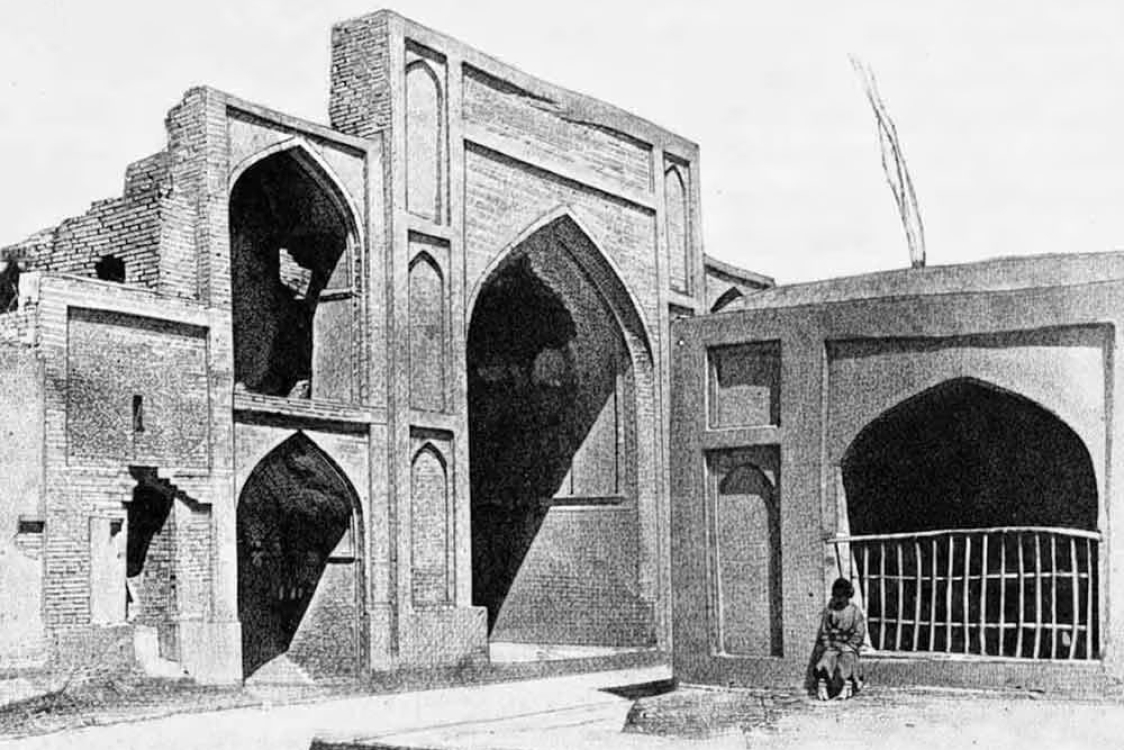
The mausoleum of the Islamic theologian and Sufi sheikh Yusuf Hamadani, located within the State Historical and Cultural Reserve ‘Ancient Merv,’ remains one of the key monuments of Turkmenistan, the IIC reports.
Constructed in the 12th century, the complex combines the historical heritage of the Seljuks, the flourishing of Eastern philosophy, and the precision of medieval architecture. During that era, Merv – known as ‘Maru-shahu jahan’ (‘King of the World’) – was an intellectual capital of the Islamic world, where prominent scholars worked, including Omar Khayyam.
Yusuf ibn Ayyub al-Hamadani, also known as Hoja Yusuf Baba, followed a path from an outstanding jurist of the Baghdad Nizamiyya school to a spiritual mentor and the founder of the Khwajagan Sufi tradition. His teachings, based on social engagement and the rejection of ostentatious ritualism, became an integral part of the cultural identity of Central Asia.
The mausoleum erected over his grave after 1140 reflects the architectural achievements of the “Seljuk Golden Age.” The transition from a cubic base to a dome symbolizes the path of knowledge—from the earthly to the divine. Researchers note that the original dome was likely double-layered: the inner shell provided acoustics, the outer one served as a landmark, while the air gap between them regulated the internal temperature. The façades are decorated using the “hazarbaf” technique, in which bricks laid at different angles create a play of light and shadow, complemented by calligraphy and vegetal ornaments.
Despite the destruction of Merv by the armies of Genghis Khan in 1221, the mausoleum survived due to its strong masonry and the special status of the site, which continued to serve as a place of pilgrimage. During the Timurid period, the complex was expanded to include mosques and caravanserai-like guest houses.
Today, the mausoleum of Hoja Yusuf Baba remains a center of spiritual attraction: for scholars, it is a valuable source of knowledge about Seljuk technologies and aesthetics; for believers, it is a place of an unbroken spiritual tradition that has endured for more than nine centuries.
Read also
Advertising




 Read us in Zen


