



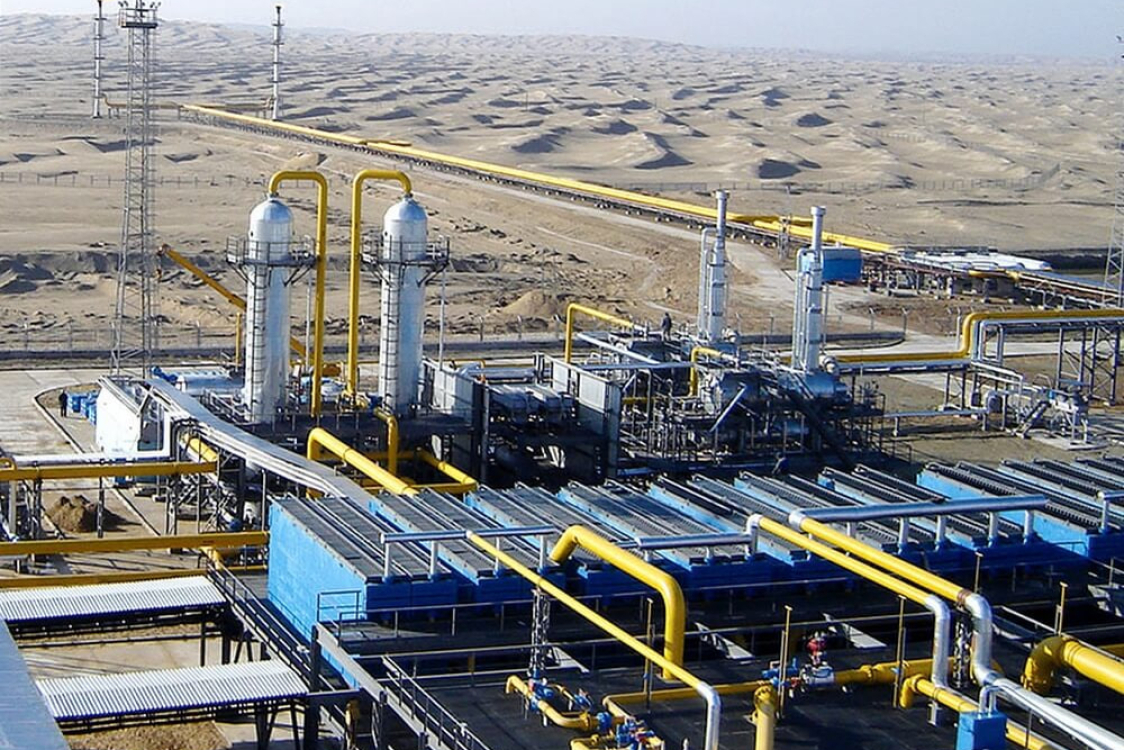
Turkmenistan’s energy strategy is based on diversification: the country is expanding its exports of high-tech products and electricity. Investments in the sector have increased production capacity, enabling the country to meet domestic demand and boost exports. Turkmenistan is becoming an important energy hub for Central and South Asia, promoting regional integration and cooperation, reports TDH.
As part of the modernisation programme, new gas-turbine power stations, power transmission lines, distribution stations and substations have been built. A major project to integrate the power grid into a single ring includes the Ahal–Balkan line (started in 2021), Mary–Ahal (completed in 2023) and Balkan–Dashoguz (commissioned in 2024). This ensures the redistribution of electricity and a stable power supply to industry and the population.
The country is introducing the latest technologies and cooperating with international companies. A 1,574 MW combined-cycle power station is under construction in the Balkan velayat, which will strengthen energy security, open up new export routes and increase electricity supplies to neighbouring states. Combined-cycle power stations also comply with environmental standards.
Turkmenistan is implementing ISO 14001, automated air monitoring and localised production of transformers and cable products. Existing power stations, including the Mary Hydroelectric Power Station, are being modernised, and solar and wind power stations (e.g., Gyzylarbat, 10 MW) are being built to ensure stable energy production.
Joint projects with ‘General Electric’ and ‘Sumitomo Corporation’ are enabling the implementation of ‘smart grid’ technology and microprocessor-based substation protection. The new gas turbine plant at the Lebap Hydroelectric Power Station (432 MW) has strengthened integration into the global power system and expanded export opportunities.
Environmental technologies are being developed, and CO₂ and NOₓ emissions are being reduced. The electricity supply along the route of the ‘Turkmenistan–Afghanistan–Pakistan–India’ gas pipeline is creating conditions for industrial investment in Afghanistan. Turkmenistan’s system is integrated into the unified energy system of Central Asia, which strengthens regional stability.
The State Energy Institute provides training for specialists, whilst technical maintenance is carried out by the Repair Centre in the Büzmeyin etrap. The Centre services ‘General Electric’ gas turbines and modern equipment in accordance with international standards.
Turkmenistan utilises the low cost of electricity generated from natural gas to invest in socio-economic and high-tech sectors. Renewable energy sources are being developed – solar panels and mobile wind turbines provide energy for settlements and pastures.
Hydrogen is regarded as a key resource for the future. Turkmenistan, which has large gas reserves, is developing the hydrogen sector and establishing a cluster and centre at the Yagshygeldi Kakayev International University of Oil and Gas for research and the production of ‘green’ and ‘blue’ hydrogen. Joint pilot projects are being implemented with companies from Japan and Europe.
Turkmenistan’s energy diplomacy is strengthening the country’s position on the international stage. Initiatives for the reliable transit of energy resources are supported by the UN General Assembly, confirming the state’s role as a stabiliser of the regional energy market.
Read also

Advertising




 Read us in Zen


