



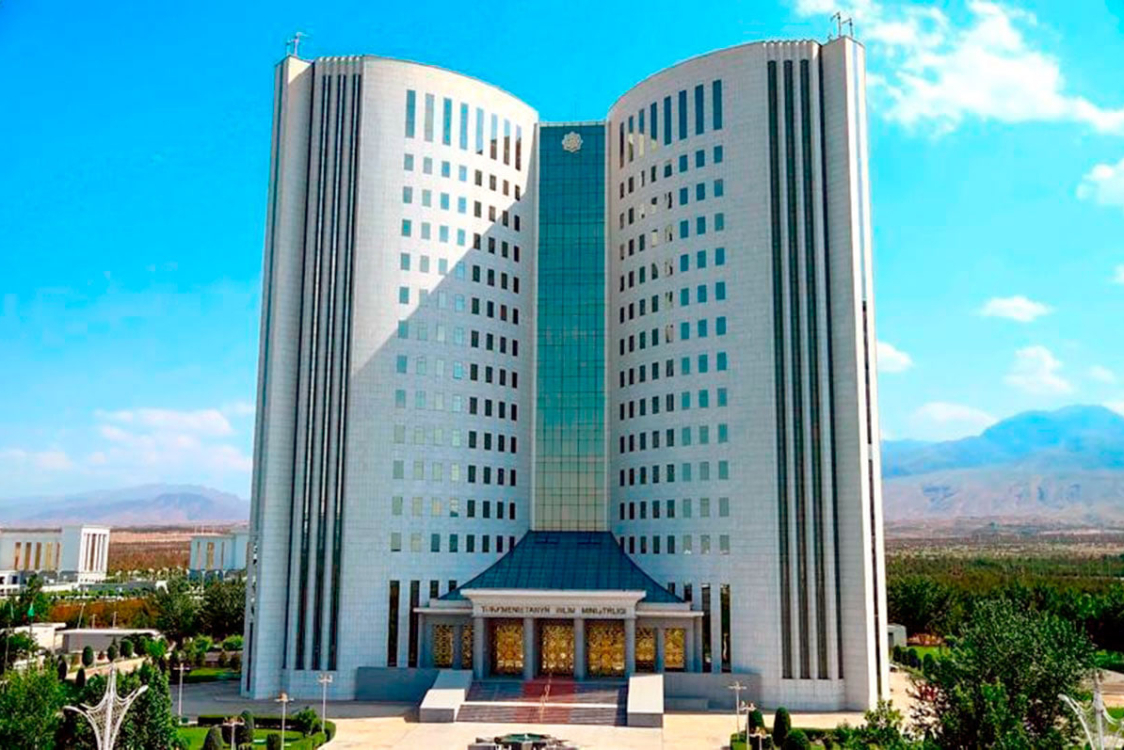
A regulatory framework for the use of artificial intelligence (AI) in education is being established in Turkmenistan. The work involves the development of a National AI Strategy, state programmes and new educational standards, according to the news agency ‘Turkmenistan: Golden age’.
In early 2026, the President of Turkmenistan, Serdar Berdimuhamedov, instructed that work begin on establishing a regulatory framework for AI. The Ministry of Communications, in collaboration with international experts from the UNDP, is developing the National AI Strategy. In addition, the State Programme for the Development of the Digital Economy for 2026–2028 is being implemented, and an AI Development Centre is being established at the ‘Turkmentelekom’ telecommunications company.
The basis for the introduction of AI is provided by the Law of Turkmenistan ‘On Education’, the Concept for the Development of the Digital Economy for 2026–2028 and the corresponding State Programme. These documents provide for the use of digital technologies, including AI, in the public sector and in education.
The experience of CIS countries and the European Union is being studied as part of the development of national regulations. In particular, the provisions of the European AI Act are being examined, including the classification of AI systems by risk level, transparency requirements and the protection of users’ rights.
Work is also underway on technical regulations for AI products, copyright issues, the protection of personal data and the allocation of powers amongst state bodies in the area of overseeing the use of AI.
In May 2026, a draft National Strategy for Turkmenistan in the field of AI was prepared in collaboration with the UNDP. In July, the country proposed developing, under the auspices of the UN, an International Code on the Peaceful Use of AI for Digital Trust in Diplomacy.
The practical application of AI has already begun in certain sectors. Since June 2026, the State Customs Service has been using AI technologies to automatically calculate customs duties.
In education, the main areas of digital transformation have been identified. These include providing educational institutions with high-speed internet and modern technology, improving AI literacy amongst teachers and students, developing AI systems that support the Turkmen language, and strengthening the protection of personal data.
In 2026, a delegation from the Ministry of Education held negotiations with OpenAI at the World Education Forum in London. The parties discussed the use of AI for data analysis and personalised learning, as well as improving the AI literacy of students and teachers.
From the 2026/2027 academic year, new national educational standards for training specialists in the field of AI will be introduced. A Bachelor’s degree programme in ‘Artificial Intelligence and Expert Systems’ has been launched at the International University of Industrialists and Entrepreneurs, and a specialisation in ‘Artificial Intelligence and Data Analysis’ has been introduced at the Polytechnic Secondary Specialised Educational Institution of the Ministry of Communications.
Turkmenistan is also studying South Korea’s experience in training AI professionals and is testing adaptive learning platforms for mathematics and AI tools for managing the quality of education in collaboration with UNESCO bodies.
Read also

Advertising

 Read us in Zen


