



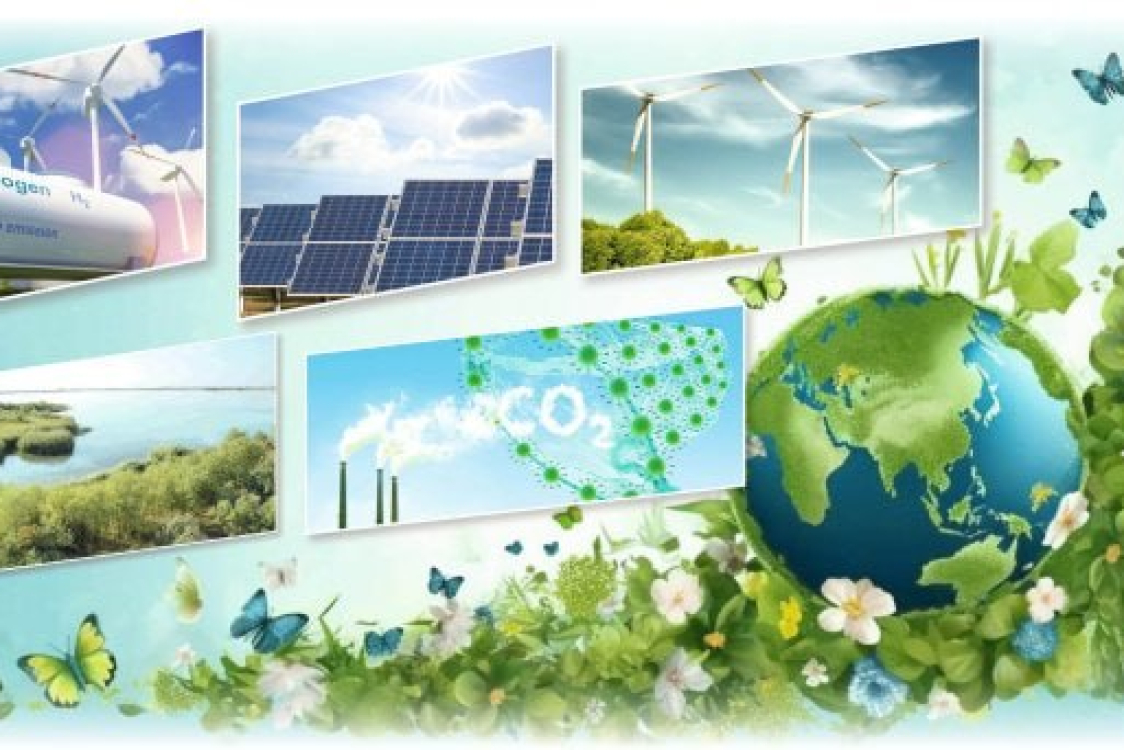
Turkmenistan is introducing world-leading technologies in the fields of geological exploration, oil and gas production and processing, whilst simultaneously taking large-scale measures to reduce its environmental impact. This is reported by the online news site Asmannews.
Particular attention is being paid to environmental protection during the development of the ‘Galkynyş’ field, the construction of the ‘Turkmenistan – Afghanistan – Pakistan – India’ (TAPI) gas pipeline, the implementation of projects in the Turkmen sector of the Caspian Sea, the expansion of gas exports, and the development of the gas processing and petrochemical industries.
Against the backdrop of the global transition to low-carbon energy, the country is diversifying its energy strategy and offering investors projects ranging from the further development of ‘Galkynyş – one of the world’s largest gas fields – to solar and wind energy.
The processes of extraction, collection, processing and transportation of raw materials at the ‘Galkynyi’, ‘Döwletabat’, ‘Malaý’ and other fields are fully automated. Control centres are equipped with electronic equipment that ensures the reliability of operational cycles and the safety of personnel.
In recent years, facilities designed to reduce harmful emissions have been commissioned:
- a polymer plant in Kiyanly (Balkan velayat);
- a plant producing ECO-93 petrol from natural gas in Ovadandepe (Ahal velayat);
- liquefied gas production units at the ‘Naýyp’ and ‘Bagaja’ fields;
- booster compressor stations at the ‘Malaý’ field.
Methane emissions are being reduced at fields currently under development: associated petroleum gas is being captured, and gas pipelines and distribution networks are being upgraded.
At the same time, the country is implementing research programmes on the use of hydrogen, solar, hydro and wind energy, as well as biogas. As part of field development, gas processing complexes are being built to purify and dry the gas and to convert hydrogen sulphide into sulphur — with particular attention being paid to fields with high concentrations of hydrogen sulphide and carbon dioxide.
Within the country’s fuel and energy sector, production infrastructure is being developed, production and processing capacities are being expanded, and gas supply routes are being diversified, taking environmental factors into account. As noted, the reduction of carbon emissions and the growth in demand for natural gas remain key trends in the development of the global energy sector.
Read also



Advertising




 Read us in Zen


