



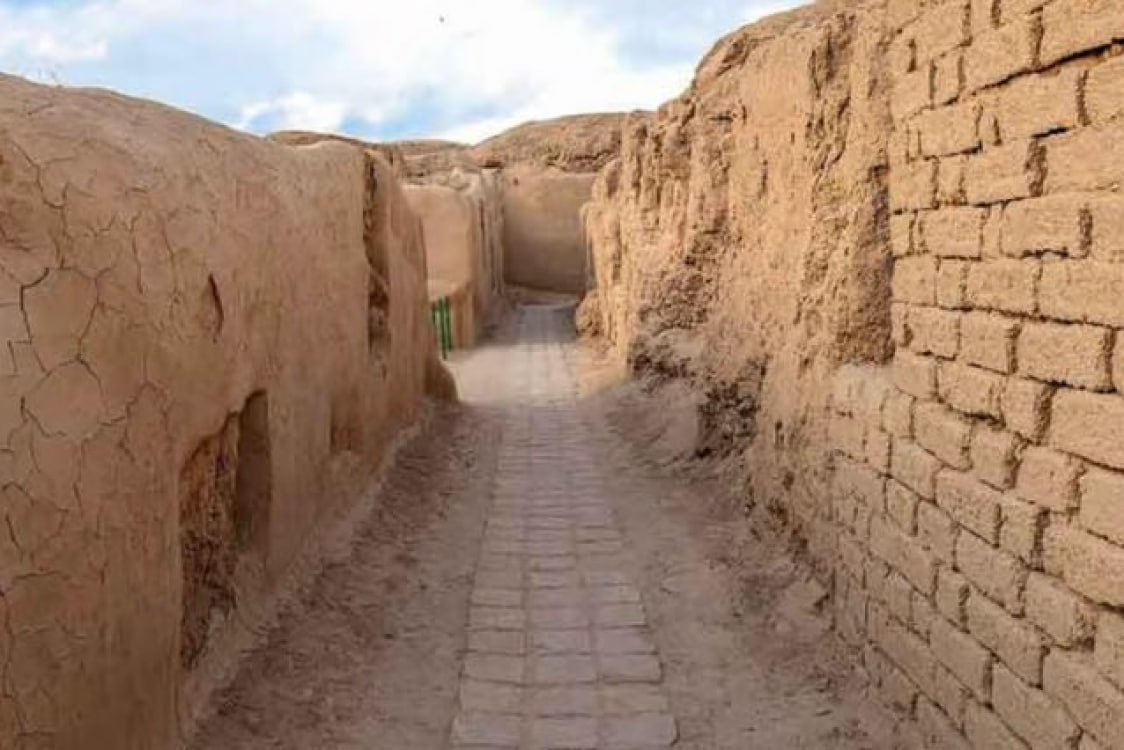
Turkmenistan, through which the Great Silk Road once passed, has since ancient times served as a connecting link between East and West and was one of the cradles of early civilizations. For more than 50 years, its archaeological heritage has been actively studied by Soviet and Russian researchers, who have made a significant contribution to the formation of a scientific school and the training of local specialists, according to the IIC.
Among the key sites is Gonur Depe, the largest settlement of ancient Margiana, where excavations have uncovered unique architectural complexes, the earliest mosaics, and early evidence of horse domestication, confirming the high level of this civilization. An equally important discovery was the settlement of Yylgynly Depe, where workshops for producing clay figurines were found, reshaping views on the development of crafts in the prehistoric period.
Significant results were also obtained from the study of Old Nisa, the center of the Parthian Kingdom, where royal archives and ritual vessels were discovered. Today, cooperation between Russia and Turkmenistan continues: restoration work is underway, findings are being systematized, and joint exhibition projects are being prepared aimed at popularizing the ancient heritage of the region.
Read also



Advertising




 Read us in Zen


