

The Nowruz holiday is one of the most ancient and enduring cultural traditions in human history. It symbolizes the arrival of spring, the awakening of nature, and the transition of life to a new stage. March 21 — the day of the vernal equinox — represents not only an astronomical phenomenon but also a date that for thousands of years has been perceived by many peoples as the beginning of a new year. For the Turkmen people, Nowruz is not merely a tradition or a festive celebration; it represents a manifestation of social unity, spiritual renewal, and national identity.
Today, Nowruz is celebrated not only as a holiday of a particular state or nation but is also widely recognized as a cultural heritage of international significance. This demonstrates the deep historical roots of the holiday and confirms that it has not lost its relevance in the modern era.
The origins of Nowruz are associated with ancient agricultural civilizations. According to scholars’ assumptions, the history of this celebration dates back more than three thousand years. The word ‘Nowruz’ originates from the Persian language and means ‘new day’. In ancient Eastern societies, the arrival of spring symbolized not only the change of seasons but also the beginning of a new economic year and a new agricultural cycle. According to historical sources, Nowruz was particularly widely celebrated in ancient Persian states as an official public holiday. During the Zoroastrian period, the arrival of spring was regarded as a symbol of the victory of light over darkness. This idea, in turn, reflected the harmony between nature and the spiritual world of humanity.
In the 21st century, the international significance of Nowruz continues to strengthen. In 2009, the Nowruz holiday was included by UNESCO in the Representative List of the Intangible Cultural Heritage of Humanity. Furthermore, in 2010, the United Nations General Assembly adopted Resolution A/RES/64/253, according to which March 21 was officially proclaimed the International Day of Nowruz. According to expert estimates, more than 300 million people around the world currently celebrate this holiday. This figure shows that Nowruz is recognized as a national holiday while also being regarded as a universal cultural phenomenon.
In the worldview of the Turkmen people, Nowruz has traditionally been perceived as the beginning of the new year. In ancient times, harmonious coexistence between humans and nature was an essential aspect of Turkmen life. Therefore, the first days of spring were welcomed with particular joy and spiritual uplift.
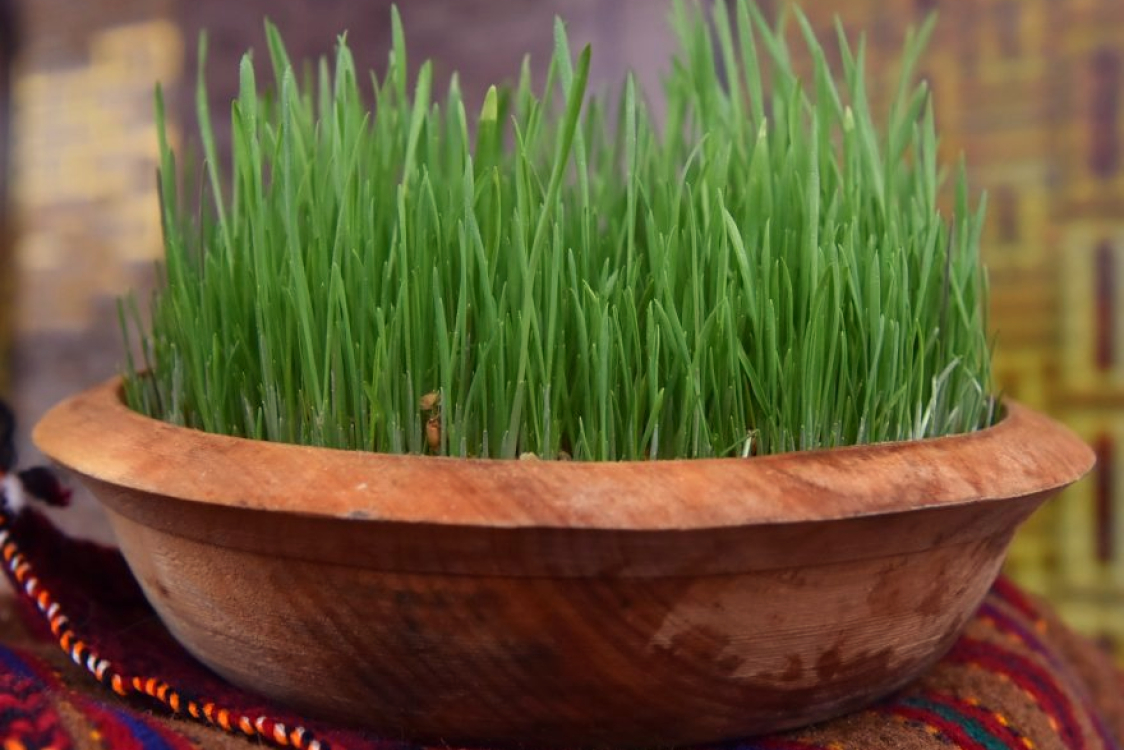
On the eve of Nowruz, the tradition of cleaning and tidying homes is widely practiced. This custom symbolizes both the establishment of physical order and spiritual preparation for a new stage of life. A clean home is considered a sign of welcoming the new year with good intentions. One of the main symbols of the holiday is the preparation of ‘semeni’ (a traditional Turkmen sweet dish made from sprouted wheat grains, flour, and sugar, prepared and eaten especially during the Nowruz holiday). The germination of wheat grains represents the continuity of life, abundance, and growth. ‘Semeni’ serves as a festive dish while also functioning as a cultural symbol passed down from generation to generation.
During the celebration of Nowruz, national games, wrestling competitions, horse races, as well as musical and artistic performances are organized. These events are significant both as a form of entertainment and as an expression of the cultural unity of society. The participation of representatives from different generations in the festive celebrations helps strengthen the spiritual bonds between them.
Another important feature of Nowruz is its unifying spiritual role in society. During the holiday, people congratulate one another, visit relatives and friends, show respect to elders, and try to forget past grievances. In this way, the celebration contributes to strengthening social harmony and fraternal relations.
Nowruz is celebrated not only in Turkmenistan but across a number of countries in the Middle East, the Caucasus, and South Asia, including Iran, Azerbaijan, Kazakhstan, Uzbekistan, Tajikistan, Turkey, Afghanistan, and several other states. The diversity of Nowruz traditions in different countries demonstrates its rich cultural variety. For example, in Iran a special festive table known as ‘Haft-sin’ is prepared, where seven symbolic items associated with spring are displayed. In Central Asian countries, folk creativity and equestrian traditions form an important part of the celebration. In some countries there is also a custom of lighting bonfires and jumping over them on the eve of the holiday. According to ancient beliefs, this ritual symbolizes the purification of a person from hardships and negative energy.
As international experience shows, Nowruz is a cultural tradition that also functions as an important instrument of cultural diplomacy between countries. The participation of different states in events dedicated to Nowruz contributes to strengthening friendly relations among nations. This circumstance is particularly significant in the context of promoting the ideas of peace and mutual understanding in the modern world.
In the contemporary period, the Nowruz holiday acts as an important cultural phenomenon that increases the interest of the younger generation in national values. The organization of events dedicated to the holiday in schools, higher educational institutions, and cultural centers helps strengthen young people's respect for historical heritage and folk traditions. At the same time, Nowruz also carries significant ecological meaning. The holiday promotes such values as respect for nature, the preservation of green spaces, planting vegetation, and maintaining natural balance. For this purpose, in Turkmenistan, every year on March 21, in accordance with a Decree of the President of the country, a nationwide tree-planting campaign is held. This initiative aims to transform the country into a flourishing green land, create forest zones, and ensure proper care of newly planted trees. Such initiatives gain particular importance against the backdrop of modern environmental challenges and contribute to fostering a responsible attitude toward nature within society.
Nowruz also serves as a symbol of national tradition and state cultural policy along with comprehensive initiatives implemented at the national level. In Turkmenistan, the preservation of national traditions and cultural heritage is one of the priority directions of state policy. Large-scale work in this field is clearly reflected, in particular, in the widespread celebration of Nowruz at the state level. Government-organized events, festivals, national games, and artistic performances create a festive atmosphere and contribute to fostering respect for national traditions among young people, preserving the cultural heritage of the nation, and strengthening the spiritual values of society. The cultural policy promoted by the President of Turkmenistan, Serdar Berdimuhamedov, as well as by the National Leader of the Turkmen people, Gurbanguly Berdimuhamedov, ensures the successful implementation of such initiatives and plays an important role in promoting the rich historical and cultural heritage of the Turkmen people on the international stage.
Nowruz serves as a spiritual force that unites society. It promotes universal human values such as peace, unity, and mutual respect. Consequently, this holiday represents a heritage of the past while also serving as a significant element of a cultural strategy oriented toward the future. According to the opinions of a number of researchers, Nowruz is one of the oldest celebrations that has survived to the present day. Its preservation across thousands of years in various cultures demonstrates that Nowruz is regarded as an important part of the shared cultural heritage of humanity.
Read also

Advertising



 Read us in Zen


