



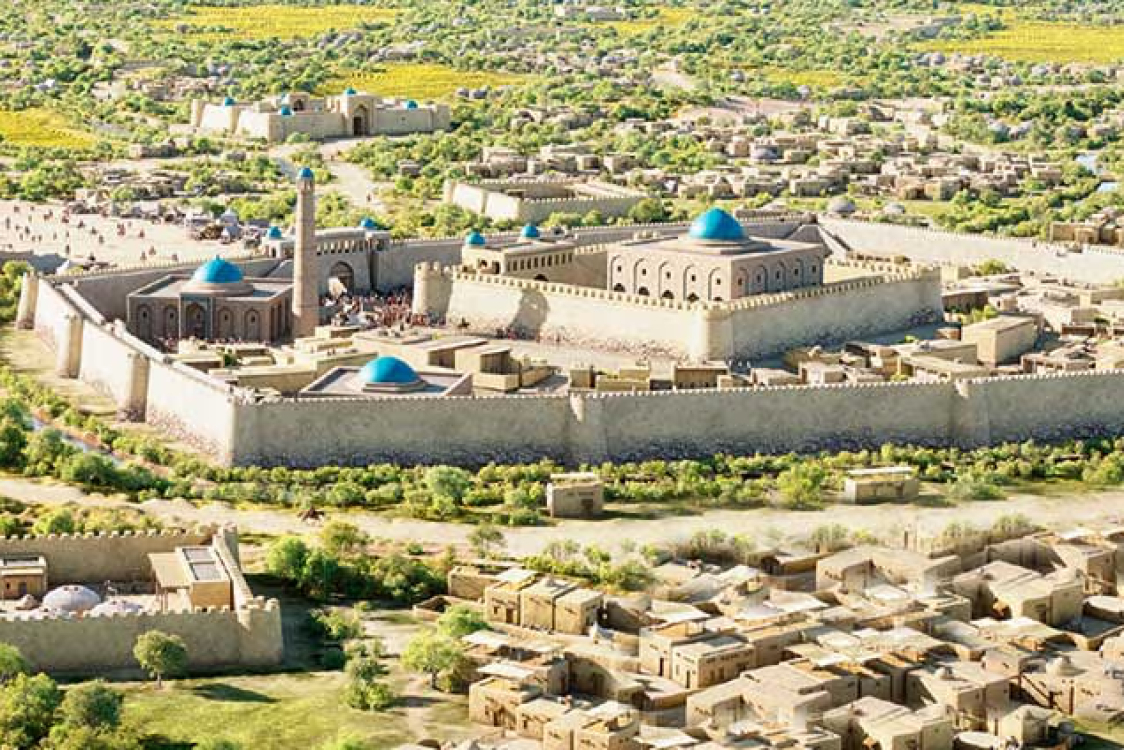
In the Ahal velayat, the results of the 2025 field season at the Paryzdepe site have been summarised. Archaeologists from the Academy of Sciences of Turkmenistan have discovered artefacts of exceptional historical value here, exploring cultural layers to a depth of nine metres, according to IIC.
At the level of the 18th archaeological tier, layers from the Eneolithic period (5th-4th millennium BC) were identified, confirming that the foothills of the Kopetdag Mountains were one of the oldest centres of human civilisation with a developed culture and way of life.
Among the finds, a ceramic vessel of the Anau culture with geometric ornamentation occupies a special place, impressing with its artistic perfection and preserving a connection with contemporary Turkmen art.
A clay spindle whorl was also discovered, evidence of a developed weaving craft, complementing data on cattle breeding and textile production in the fifth millennium BC.
Excavations at Paryzdepe continue, revealing new pages in the history of Turkmenistan. Each artefact helps to understand the formation of national identity and cultural heritage, and the results of the research will form the basis for new academic publications confirming the importance of Turkmenistan as the historical centre of the Great Silk Road.
Read also



Advertising




 Read us in Zen


