



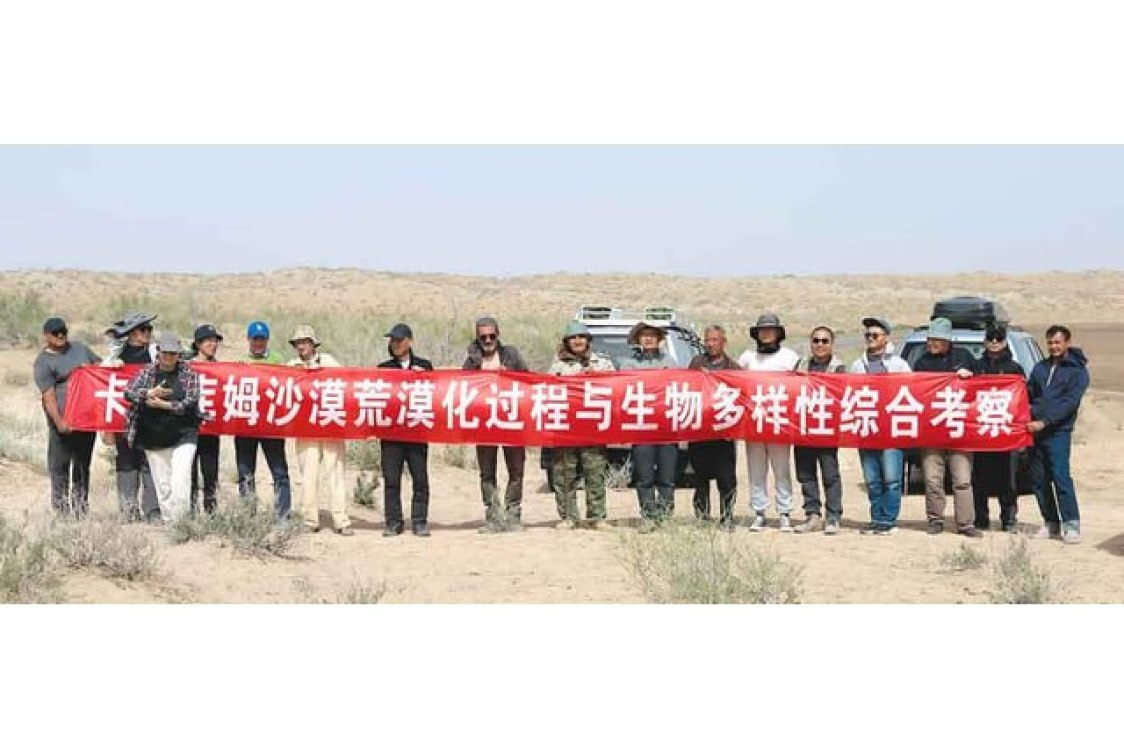
A joint desert expedition conducted by the National Institute of Deserts, Flora and Fauna and the Xinjiang Institute of Ecology and Geography of the Chinese Academy of Sciences has been completed in Turkmenistan, according to the IIC.
The collected materials will be used by Turkmen scientists to update the Red Book and to create an atlas of desert flora, while Chinese specialists will conduct a comparative analysis of the ecosystems of the Karakum Desert and the Taklamakan Desert.
The research route covered key natural areas of the country, including the Central Karakum research station “Garryköl,” saxaul forests in the Bokurdak and Erbent regions, the Darvaza gas crater, as well as the Kaplankyr Nature Reserve and the Tarimgaya and Zengi-Baba Lake areas, where monitoring of birds, plants, reptiles, and soil studies was carried out.
The expedition also passed through the Unguz depression and the “Bereketli Garagum” reserve, where vegetation measurements and assessments of desertification levels were conducted. In remote villages, research stations were established.
The final destination was the Repetek Biosphere Reserve (a UNESCO site), where scientists studied the museum, library, and early 20th-century herbarium, as well as natural features including a century-old saxaul tree and an ancient well. The participants noted the region’s natural characteristics and concluded the expedition with a return to Ashgabat.
Read also





Advertising




 Read us in Zen


