


Society

A meeting on the implementation of the UN Special Programme for the Aral Sea has begun in Awaza
12.09.2026The Second Consultative Meeting of Central Asian countries, dedicated to developing a mechanism for implementing the United Nations Special Programme for the Aral Sea (UN SPAS), has begun in the ‘Awaza’ National Tourist Zone. This was reported by the IIC. Over the course of two days, representatives from countries in the region, international organisations and experts will discuss the programme’s priorities, transboundary water cooperation, water security and the restoration of ecosystems in the Aral Sea basin. On the first day, participants reviewed the programme’s content, its alignment with national and regional initiatives, and the prospects for strengthening cooperation. Narine Sahakyan, UNDP Resident Representative in Turkmenistan, emphasised the need to strengthen dialogue, trust and joint action to address the interlinked challenges of water resources, climate change and the state of ecosystems. It is expected that the meeting will result in the adoption of a document setting out the participating countries’ common approaches. The event is being held with the participation of relevant government bodies in Turkmenistan and with the support of UNDP/GEF, the Blue Peace Central Asia initiative and other partners.

Turkmen musicians are taking part in the Tsinandali Festival
12.09.2026Turkmen musicians are taking part in the eighth international Tsinandali Classical Music Festival, which is being held in Georgia from 3 to 13 September 2026. This has been reported by the IIC of Turkmenistan. They are representing Turkmenistan as part of the Pan-Caucasian Youth Orchestra alongside performers from Georgia, Turkey, Azerbaijan, Armenia, Kazakhstan, Moldova, Ukraine and Uzbekistan. A musician from the ‘Mukam’ Palace of the State Cultural Centre of Turkmenistan has been appointed concertmaster of the orchestra. As part of the festival, the young musicians are taking part in seminars and masterclasses led by renowned figures from the world of classical music. Turkmenistan’s Ambassador to Georgia, D. Seyitmammedov, met with the organisers and the Turkmen participants of the festival. During the meeting, he emphasised the importance of the forum for the development of international cultural dialogue and creative cooperation.

Turkmenistan is introducing digital irrigation technologies
11.09.2026The UNDP, in collaboration with the Ministry of Environmental Protection of Turkmenistan, is introducing digital technologies for precision water management in the country’s agricultural sector. Based on the FAO’s CROPWAT 8.0 programme, experts have developed software adapted to the region’s climate and soil conditions, according to the Orient news agency. The first pilot site was the Saparmyrat Turkmenbashi etrap in the Dashoguz velayat. Hydromodular zoning was carried out across an area of over 86,000 hectares: the programme, based on satellite and meteorological data, calculates precise irrigation rates for each crop, thereby preventing water wastage. To put irrigation on a scientific footing across the country, the UNDP organised a workshop for hydraulic engineers, agronomists and lecturers at relevant universities. Digital algorithms for calculating fields’ water requirements will be incorporated into university curricula, and the method itself will form the basis for adapting agriculture to climate change.

Discussions on capacity-building for relevant ministries took place at the OSCE Centre in Ashgabat
11.09.2026On 9 September 2026, a working meeting was held at the Organisation for Security and Co-operation in Europe (OSCE) Centre in Ashgabat, focusing on capacity-building for the relevant authorities in Turkmenistan. This was reported by IIC of Turkmenistan. The meeting was attended by representatives of the country’s ministries and agencies, including the State Migration Service. The participants reviewed the work carried out so far in 2026 and set out the main objectives for the fourth quarter. National experts took part in the discussion. The participants also noted the importance of such meetings for developing cooperation with international organisations and exchanging experience.

Discussions were held in Romania regarding the forthcoming meeting of the Halk Maslahaty of Turkmenistan
11.09.2026On 9 September 2026, an event was held at the Embassy of Turkmenistan in Romania to mark the forthcoming session of the Halk Maslahaty of Turkmenistan and the proclamation of 2028 as the Year of International Law. This was reported by the news agency ‘Turkmenistan: Golden age’. The meeting was attended by Turkmen students and citizens of Turkmenistan living in Romania. Turkmenistan’s Ambassador to Romania, Annamammet Annayev, spoke about the significance of the Halk Maslahaty session, which is due to take place on 23 September. According to him, it will serve as a platform for taking stock of the country’s development since independence and setting new priorities for domestic and foreign policy. Participants also discussed the initiative by the President of Turkmenistan, Serdar Berdimuhamedov, to proclaim 2028 as the Year of International Law. The relevant resolution of the UN General Assembly was adopted on 24 July 2026, co-sponsored by 78 states. As part of the event, a presentation was given on the Ahal-Teke horse – the symbol of 2026 – and an exhibition of books by the President of Turkmenistan, Serdar Berdimuhamedov, and the National Leader of the Turkmen people, Chairman of the Halk Maslahaty of Turkmenistan, Hero Arkadag Gurbanguly Berdimuhamedov, took place. The publications focus on issues of neutrality, peacekeeping, historical and cultural heritage, and the development of Turkmenistan.

A delegation from Turkmenistan took part in the AIM Congress 2026 in Dubai
11.09.2026From 7 to 9 September 2026, the 15th AIM Congress 2026 was held at the Dubai World Trade Centre. This was reported by the IIC of Turkmenistan. The Turkmenistan delegation was led by the Ambassador of Turkmenistan to the United Arab Emirates. It comprised representatives from the Ministry of Finance and Economy, the Ministry of Industry and Construction, and the State Bank for Foreign Economic Affairs of Turkmenistan. Representatives from 191 countries and various organisations took part in the congress. The main focus was on investment cooperation, economic development and industrial policy. The Turkmen delegation took part in thematic sessions, including a panel discussion on Central Asia, a ministerial round table on investment, and discussions on issues relating to free economic zones and industrial policy. As part of the Congress, bilateral meetings were held with representatives of financial institutions, companies and investment promotion agencies. The parties discussed prospects for cooperation with Turkmenistan. In addition, the Turkmen delegation visited the Congress exhibition.

The EU Ambassador to Turkmenistan laid flowers at the Independence Monument
11.09.2026The European Union’s Ambassador to Turkmenistan, Luc Devigne, laid flowers at the Monument to Turkmenistan’s Independence and also visited the Turkmenbashi Ruhi Mosque and the Turkmenbashi Mausoleum, where he likewise laid flowers. This was reported by the news website Turkmenportal. Earlier, Devigne presented his credentials to the President of Turkmenistan, Serdar Berdimuhamedov, and handed copies of them to the Foreign Affairs Minister, Rashid Meredov. As the EU Ambassador to Turkmenistan, Devigne will head the European Union’s delegation in Ashgabat and will liaise with Turkmen state bodies and partners. According to the press release, his work will focus on strengthening the partnership between the EU and Turkmenistan, developing cooperation and advancing the common interests of both sides.

Turkmenistan is represented at a public safety forum in China
11.09.2026A delegation from the State Migration Service of Turkmenistan, led by the agency’s Deputy Chairman, is taking part in the 2026 Conference of the Global Public Security Cooperation Forum, which opened on 9 September in Lianyungang, Jiangsu Province. This was reported by the IIC of Turkmenistan. As part of the forum, Turkmen specialists took part in the Sub-Forum on Cooperation in Migration Management. The day before, they held negotiations with the leadership of the State Administration for Migration Affairs of the People’s Republic of China. The parties discussed the exchange of experience, the digitalisation of processes, the transition to electronic document management and the introduction of modern technologies. More than 2,100 delegates from 139 countries and international organisations are taking part in the conference. The programme includes eight thematic sub-forums dedicated to migration policy, cyber security, the fight against transnational crime and the application of modern technologies. The forum will run until 11 September. Representatives from Turkmenistan will also visit an exhibition of security equipment. Following the meetings, it is planned to adopt a Regional Report on trends in migration policy.

A delegation from Turkmenistan is taking part in the International Space Summit
11.09.2026A delegation from Turkmenistan is participating in the first International Space Summit, which is taking place at the ‘Grand Palais’ in Paris, according to the IIC of Turkmenistan. The event brought together approximately 2,000 representatives from government agencies, international organizations, the space industry, and scientific and investment circles. On the first day, panel discussions and thematic sessions were held, focusing on the development of space infrastructure and industry, the application of artificial intelligence and new technologies, the training of specialists, and international cooperation in the fields of space exploration and Earth and ocean observation. An exhibition showcasing cutting-edge developments and innovative solutions in the space sector was also organised as part of the Summit. The International Space Summit is still in progress.

Turkmenistan has begun developing a system for forecasting labour market demand
11.09.2026UNDP in Turkmenistan, in collaboration with the country’s Ministry of Education, has launched the pilot phase of the ‘National System for Strategic Human Capital Planning’ project. The initiative aims to establish a coherent, data-driven system linking demographic trends, education, skills development and labour market needs, according to the news website Turkmenportal. The project was launched at the first coordination meeting, attended by key government bodies and international UNDP experts. The project will help strengthen the capacity of national institutions in data analysis, skills forecasting and strategic human capital planning. One of the key areas of focus is the collection and analysis of data for human capital foresight and skills planning in Turkmenistan, according to a UNDP press release. As part of the international experts’ visit, consultations will be held with relevant ministries and departments on issues relating to human capital planning, labour market needs, available data and mechanisms for inter-agency cooperation. The outcomes of these consultations will be taken into account when developing the national system. UNDP Resident Representative in Turkmenistan, Narine Sahakyan, noted that human capital development is a key prerequisite for sustainable development, and that the country’s young population presents significant opportunities for its future. Azat Atayev, Deputy Minister of Education of Turkmenistan, emphasised that education transforms demographic potential into skilled and competitive human capital. According to him, the project is conceived not as an analytical study, but as a practical planning tool that will help identify medium- and long-term needs for specialists and skills, link these to the workforce training system, and improve the soundness of decision-making regarding educational priorities. Atayev added that the value of the project would depend on whether it was possible to establish a mechanism enabling the training of personnel in advance, rather than reacting to shortages after the event. The initiative is in line with Turkmenistan’s national priorities in the fields of education, human capital, digital transformation and economic diversification, including the Strategy for the Development of Higher Vocational Education for 2026–2052 and its implementation plan for 2026–2030.

A journalist from Turkmenistan took part in CIPCC-2026 in Beijing
11.09.2026From September to December 2026, China is hosting the ‘China International Press Communication Centre (CIPCC) 2026’ international training programme for journalists. This was reported by the news agency ‘Turkmenistan: Golden age’. The opening ceremony took place on 8 September in Beijing. The programme is being implemented as part of the ‘International Information Centre’ project and brings together 109 journalists from 101 countries. Among the participants is a representative of the online newspaper ‘Altyn asyr’ from Turkmenistan. The aim of the programme is to familiarise foreign journalists with China’s political, economic and cultural life, as well as to strengthen international cooperation in the media sector. Participants will have the opportunity to enhance their professional skills and broaden their knowledge of the PRC’s political system, its economic development and foreign policy. The organisers note that such programmes contribute to fostering dialogue between countries and strengthening professional ties among journalists from different nations.
Turkmen youth took part in a climate conference in Samarkand
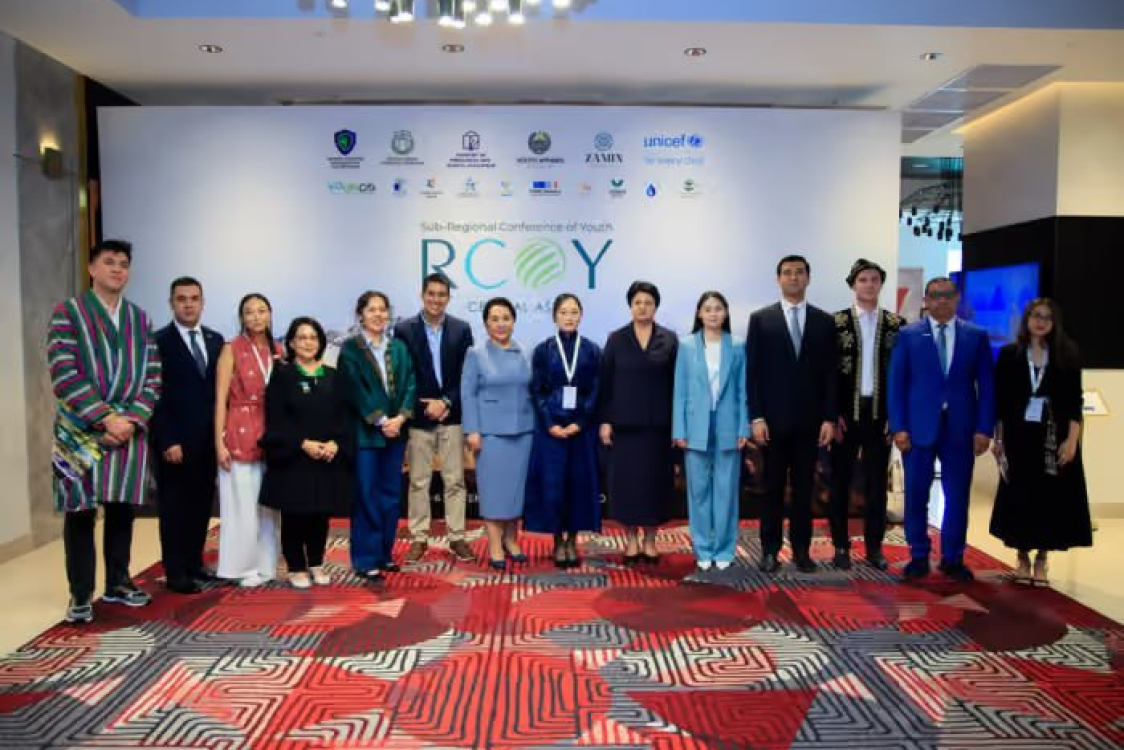
10.09.2026Representatives of youth environmental organisations from Turkmenistan took part in the RCOY Central Asia 2026 regional conference, which took place on 4–6 September in Samarkand. This was reported by the IIC. The conference was attended by around 100 experts and volunteers from Central Asian countries, as well as Azerbaijan, Afghanistan, Mongolia and Turkey. Participants discussed issues relating to climate policy, water resource management, combating desertification and glacier conservation. Following the conference, the participants adopted a Regional Youth Declaration, which is to be submitted to the relevant ministries, UN bodies and international partners. The conference was co-organised on behalf of Turkmenistan by ‘Mümkinçilik Dünýäsi’ and the ‘Youth Climate Network Turkmenistan’.
Read also

Advertising

 Read us in Zen


