

Policy

The CIS Secretary-General noted the high standard of organisation of the meetings in Turkmenistan
12.09.2026A meeting of the heads of delegations in a restricted format took place in Ashgabat as part of the 111th session of the CIS Economic Council. The participants discussed the main areas of economic cooperation, according to IIC of Turkmenistan. CIS Secretary-General Sergey Lebedev thanked the President of Turkmenistan, Serdar Berdimuhamedov, for organising the meeting and for his hospitality. He also congratulated the Turkmen people on the upcoming 35th anniversary of independence, which is celebrated on 27 September, and highlighted the significance of the session of the Halk Maslahaty of Turkmenistan, scheduled for 23 September 2026. Sergey Lebedev highlighted the high standard of Turkmenistan’s chairmanship of the CIS in 2026 and the organisation of events during its chairmanship. The Secretary-General of the CIS expressed his confidence that the forthcoming autumn summits of the Commonwealth’s leaders at the ‘Awaza’ National Tourist Zone would be held to a high standard.
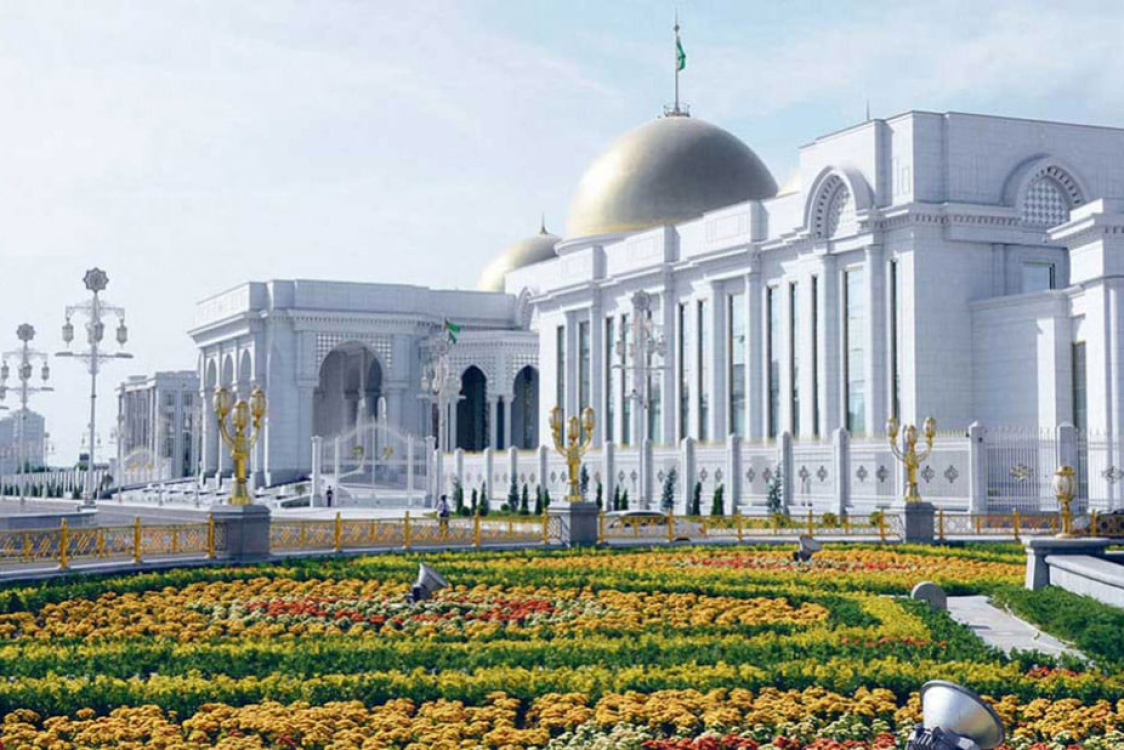
The President of Turkmenistan congratulated Singapore on the 30th anniversary of diplomatic relations
12.09.2026The President of Turkmenistan, Serdar Berdimuhamedov, has congratulated the President of the Republic of Singapore, Tharman Shanmugaratnam, the Prime Minister of the Republic of Singapore, Lawrence Wong, and the people of Singapore on the 30th anniversary of the establishment of diplomatic relations between the two countries. This was reported by AsmanNews. The message of congratulations noted that relations between Turkmenistan and Singapore are based on the principles of mutual respect and equality. The President of Turkmenistan expressed his interest in further expanding bilateral cooperation and his confidence that it would develop in the interests of both countries. Serdar Berdimuhamedov wished the leadership of Singapore good health, happiness and well-being, and the people of the country progress and prosperity.

Serdar Berdimuhamedov met with the State Minister for the Economy of Japan
12.09.2026On 11 September, the President of Turkmenistan, Serdar Berdimuhamedov, received the State Minister for Economy, Trade and Industry of Japan, Kenji Yamada, who had arrived in Turkmenistan on an official visit. This was reported by the news agency TDH. The parties discussed the prospects for the development of Turkmen-Japanese cooperation, paying particular attention to trade and economic ties, investment, high technology and the implementation of joint projects. Kenji Yamada conveyed warm greetings from Emperor Naruhito of Japan and Prime Minister Sanae Takaichi to the President of Turkmenistan, Serdar Berdimuhamedov, and to the National Leader of the Turkmen people and Chairman of the Halk Maslahaty of Turkmenistan, Gurbanguly Berdimuhamedov. He also noted the significance of the President of Turkmenistan’s visits to Japan and the country’s participation in ‘EXPO 2025’ in Osaka. The President of Turkmenistan extended reciprocal good wishes to the Japanese leadership and emphasised Turkmenistan’s interest in further expanding the partnership in the fields of the economy, trade and industry. It was noted that bilateral cooperation is developing on the basis of mutual respect, equality and trust. Turkmenistan has had positive experience of working with Japanese companies in the transport, gas-chemical and agro-industrial sectors. At the conclusion of the meeting, the parties expressed their confidence in the further development of friendly relations and mutually beneficial cooperation.

A Memorandum of Cooperation between the CIS and the IAC has been signed in Ashgabat
12.09.2026On 11 September 2026 in Ashgabat, CIS Secretary-General Sergey Lebedev and Oleg Storchevoy, Chairman of the Interstate Aviation Committee, signed a Memorandum of Cooperation between the CIS Executive Committee and the IAC. This was reported by IIC of Turkmenistan. The document provides for cooperation in the development of air transport, the improvement of the regulatory framework, air traffic management and the enhancement of flight safety. Particular attention is paid to the development of the transport services market, digital technologies and artificial intelligence, cyber security and reducing the environmental impact of aviation. The parties have agreed to exchange information, expert materials and practical experience, as well as to hold consultations and organise joint events.

Turkmenistan and Japan discussed expanding their economic partnership
12.09.2026On 11 September 2026, Minister of Foreign Affairs of Turkmenistan Rashid Meredov held a meeting with the State Minister of Economy, Trade and Industry of Japan, Kenji Yamada. This was reported by the press office of the Foreign Affairs Ministry of Turkmenistan. The parties discussed the current state and prospects of Turkmen-Japanese cooperation, focusing primarily on trade and economic interaction. During the meeting, they considered issues relating to the expansion of business contacts, the implementation of joint projects and the introduction of Japanese technologies and expertise into Turkmenistan’s economy. The parties also exchanged views on cooperation in the energy sector, industry, transport, the chemical industry, digitalisation and the development of the circular economy. Particular mention was made of the role of the Turkmen-Japanese and Japanese-Turkmen Committees on Economic Cooperation in the development of bilateral trade and economic ties. The parties reaffirmed their readiness to continue the dialogue and strengthen the Turkmen-Japanese partnership.

Turkmenistan’s Deputy Foreign Affairs Minister met with the UN Permanent Coordinator
12.09.2026On 11 September 2026, a meeting took place at the Foreign Affairs Ministry of Turkmenistan between the Deputy Foreign Affairs Minister of Turkmenistan, Myahri Byashimova, and the UN Resident Coordinator in Turkmenistan, Xiaojun Grace Wang. This was reported by the press office of the Foreign Affairs Ministry of Turkmenistan. The parties discussed Turkmenistan’s cooperation with the United Nations system, including the implementation of joint programmes and initiatives. During the meeting, they also considered promising areas for cooperation, topical issues on the regional and international agenda, and preparations for upcoming high-level events. The parties reaffirmed their commitment to the further development and expansion of cooperation between Turkmenistan and the United Nations.

The 111th meeting of the CIS Economic Council took place in Ashgabat
12.09.2026The 111th meeting of the Economic Council of the Commonwealth of Independent States took place in Ashgabat. The meeting was opened and chaired by the Council’s Chairman, Hojamyrat Geldimyradov, Deputy Chairman of the Cabinet of Ministers of Turkmenistan. This was reported by the IIC of Turkmenistan. Delegations from Azerbaijan, Belarus, Kazakhstan, Kyrgyzstan, Russia, Tajikistan and Uzbekistan took part in the meeting, as did CIS Secretary-General Sergey Lebedev. In a closed-door session, the parties discussed current issues relating to economic cooperation. The participants approved the Action Plan for the implementation of the Transport Security Strategy for 2026–2030. Reports from the Interstate Council on Standardisation and the Inter-governmental Council on Agricultural and Agro-Industrial Complex Issues were also considered. Particular attention was paid to innovation and technological development. Drafts of the Concept for Cooperation in the Production of Advanced Materials for High-Tech Sectors, initiatives on the digital transformation of the timber industry, and the development of radio navigation up to 2030 were presented. A number of specialist institutions have been granted the status of CIS reference organisations in the fields of transfusion medicine, medical education, rehabilitation and digital development. Following the meeting, 12 documents will be submitted to the Council of Heads of Government of the CIS for approval. The next meeting of the CIS Economic Council will take place on 27 November 2026 in Moscow.

The President of Turkmenistan wished Ivan Kuzmin a happy birthday
11.09.2026The President of Turkmenistan, Serdar Berdimuhamedov, has congratulated Ivan Kuzmin, Hero of Turkmenistan, Chairman of the Intergovernmental Coordination Council on Seed Production in the CIS, and President of the ‘Semena’ Association, on his birthday. This was reported by the news agency TDH. The Head of State wished him good health, happiness and success in his important work.

Negotiations took place in Ashgabat between the Head of the MFA of Turkmenistan and the CIS Secretary-General
11.09.2026In Ashgabat, Minister of Foreign Affairs of Turkmenistan Rashid Meredov held a meeting with CIS Secretary-General Sergey Lebedev, who had arrived in the country to take part in the 111th meeting of the CIS Economic Council. This was reported by the press office of the Foreign Affairs Ministry of Turkmenistan. The parties discussed the practical implementation of the priorities of Turkmenistan’s presidency of the Commonwealth, as well as preparations for upcoming events at the highest and high levels. Separately, they addressed issues relating to preparations for the meetings of the CIS Council of Foreign Affairs Ministers and the CIS Council of Heads of State, which are to take place on 7 and 9 October at the ‘Awaza’ National Tourism Centre: organisational aspects and the content of the agendas were reviewed. The parties reaffirmed their commitment to continuing their cooperation.
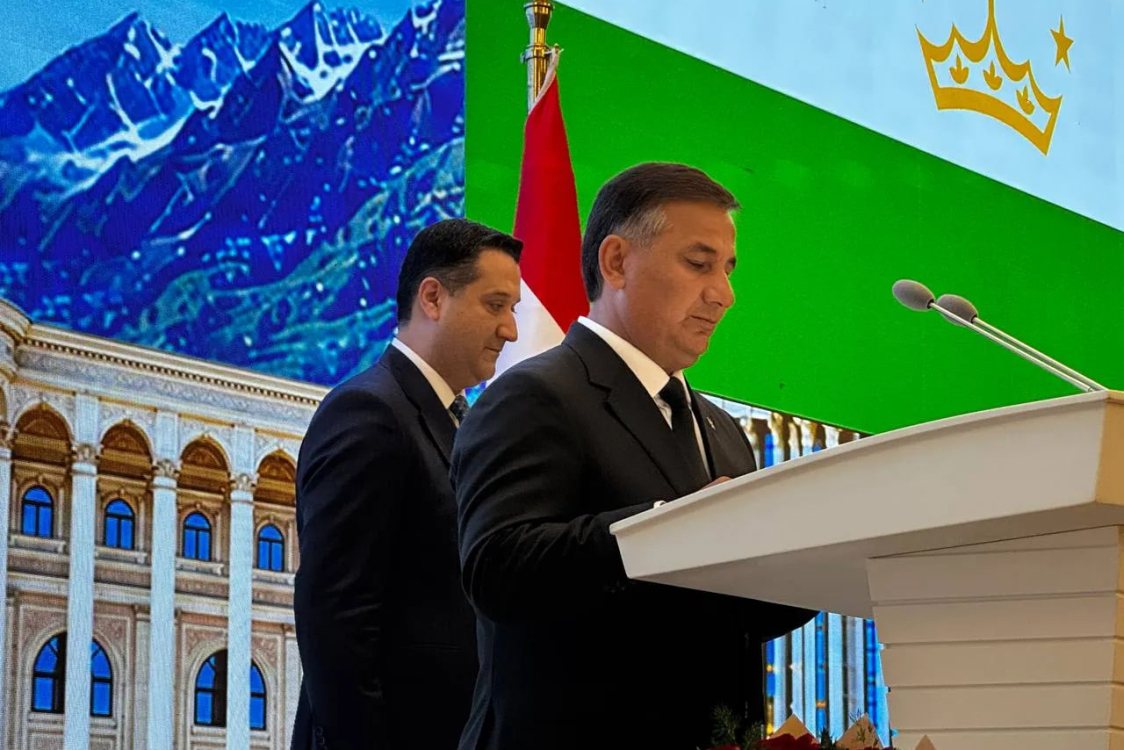
Turkmenistan and Tajikistan are strengthening their bilateral ties
10.09.2026Turkmen-Tajik relations continue to develop across the board on the basis of good neighbourliness, mutual respect and trust. This was stated by T. Atahallyev, Deputy Chairman of the Cabinet of Ministers of Turkmenistan, during a speech at a formal reception marking the 35th anniversary of the independence of the Republic of Tajikistan, according to the news website Turkmenportal. The Deputy Prime Minister noted that cooperation between the two countries is underpinned by historical, spiritual and cultural ties, and that the convergence of Turkmenistan’s and Tajikistan’s positions is evident in their collaboration at regional and international levels, including within the framework of the UN. According to T. Atahallyev, regular meetings between the Heads of State and the existing legal and treaty framework contribute to the development of bilateral relations. The Joint Turkmen-Tajik Inter-governmental Commission on Trade, Economic, Scientific and Technical Co-operation also plays an important role. Particular attention is paid to humanitarian cooperation. The countries organise Culture Days, exhibitions and creative gatherings, and are also expanding links between universities and research institutions. The Deputy Prime Minister expressed his confidence in the further strengthening of mutually beneficial cooperation and conveyed his best wishes for prosperity and well-being to the people of Tajikistan on the occasion of Independence Day.
The Vice Governor of St. Petersburg visited Ashgabat
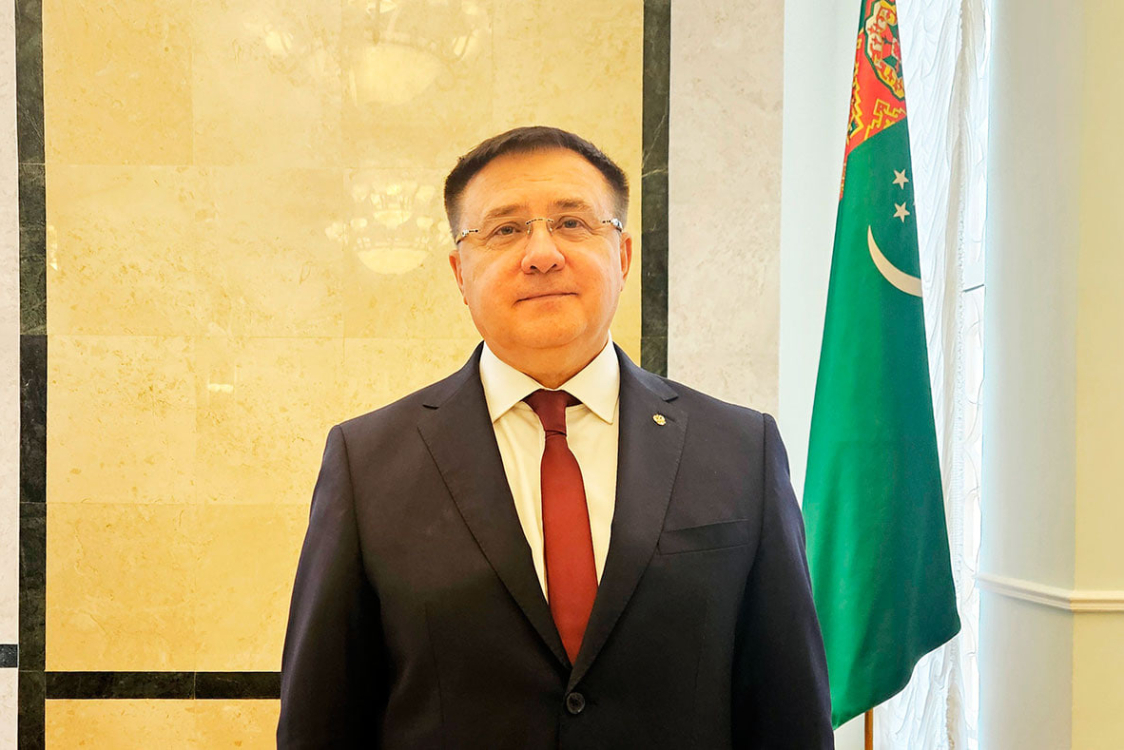
10.09.2026Vladimir Omelnytsky, Vice Governor of Saint Petersburg (Russian Federation), paid a working visit to Turkmenistan. The programme included laying flowers at the ‘Halk hakydasy’ (People’s Memory) memorial complex, a meeting with a survivor of the Siege of Leningrad, and negotiations on bilateral cooperation, reports the news agency ‘Turkmenistan: Golden age’. The St. Petersburg delegation paid tribute to those who lost their lives during the Great Patriotic War. During the war, Turkmenistan took in around 32,000 residents of Leningrad and its environs. Despite the hardships of wartime, local residents provided the new arrivals with the necessary assistance. In Ashgabat, Vladimir Omelnytsky met with Galina Mamedova, a survivor of the Siege of Leningrad. She noted the attention and support given to veterans by both Russia and Turkmenistan. On the instructions of the Governor of St. Petersburg, Alexander Beglov, the delegation held negotiations with representatives of relevant Turkmenistan government departments. The parties discussed the supply of pharmaceutical products and equipment for the new International Medical Centres in Ashgabat. It was also proposed to hold online seminars using artificial intelligence technologies to facilitate the exchange of expertise between healthcare specialists from St. Petersburg and Turkmenistan. In addition, discussions centred on touring performances by St. Petersburg theatres, the organisation of museum exhibitions and displays in Ashgabat, as well as the expansion of trade and economic cooperation. Vladimir Omelnytsky thanked the Turkmen leadership and the country’s Government for their hospitality and for their support in developing bilateral cooperation.
A reception was held in Ashgabat to mark the 35th anniversary of Tajikistan’s independence
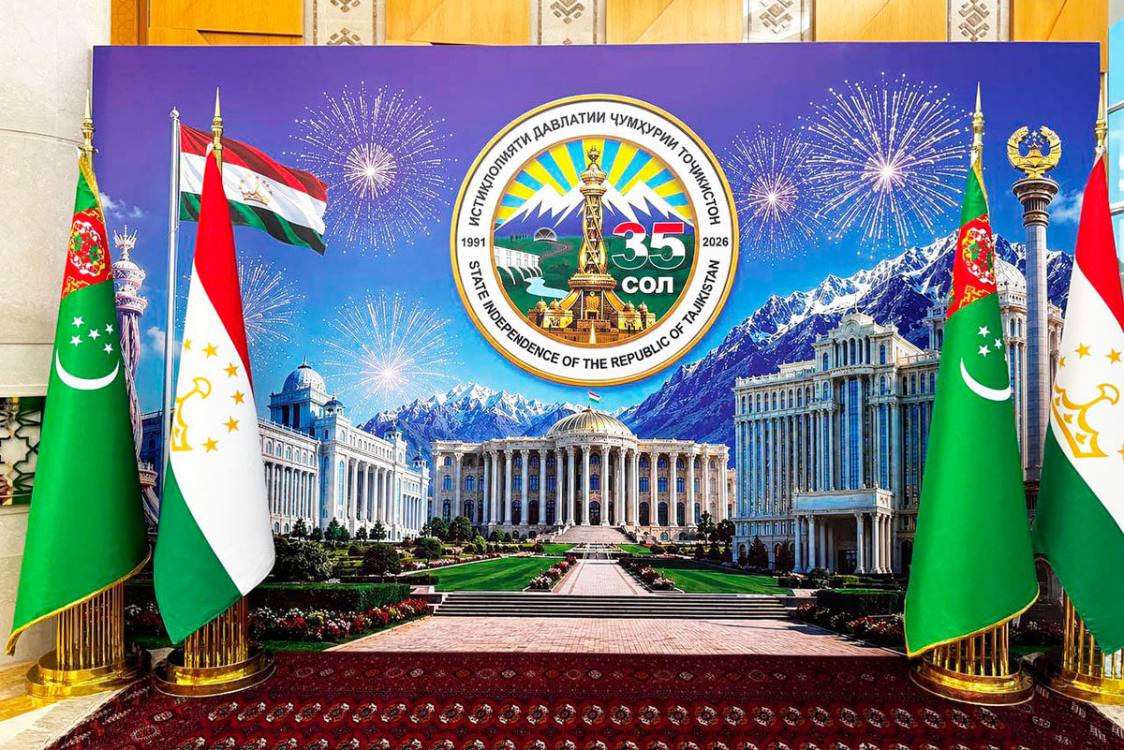
10.09.2026An official reception was held in Ashgabat to mark the 35th anniversary of the Republic of Tajikistan’s independence. The event was attended by the Deputy Chairman of the Cabinet of Ministers of Turkmenistan, T. Atahallyev, representatives of diplomatic missions and international organisations, as well as members of the Tajik diaspora, according to the news agency ‘Turkmenistan: Golden age’. Vafo Niyatbekzoda, Ambassador Extraordinary and Plenipotentiary of the Republic of Tajikistan to Turkmenistan, highlighted the significance of 9 September and spoke about Tajikistan’s development since gaining independence. The diplomat paid particular attention to bilateral relations. According to him, cooperation between the two countries is developing within the framework of a deepened strategic partnership and is based on mutual respect. This is evidenced by regular high-level contacts and the existing legal and treaty framework. Speaking on behalf of Turkmenistan was T. Atahallyev, Deputy Chairman of the Cabinet of Ministers of Turkmenistan. He emphasised that relations between the two states are based on traditions of good neighbourliness, spiritual kinship and fraternal ties. The Deputy Prime Minister also noted the convergence of Turkmenistan’s and Tajikistan’s positions on a number of international issues, including within the framework of the UN. According to him, regular meetings between the Heads of State contribute to strengthening mutual understanding and developing cooperation.
Read also
Advertising
 Read us in Zen


